
P0443 on Ford F-150
Factory diagnostic protocol and troubleshooting wire for fault code P0443 specifically for the Ford F-150 (2020–2026, 3.5L / 2.7L EcoBoost Twin-Turbo V6 / 5.0L Coyote V8 / 3.5L PowerBoost Hybrid).
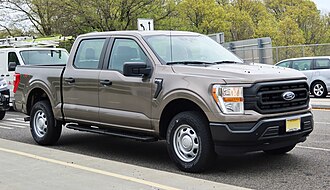
1. Symptoms of P0443 on Ford F-150
When the Engine Control Module (ECM/PCM) on your Ford F-150 (3.5L / 2.7L EcoBoost Twin-Turbo V6 / 5.0L Coyote V8 / 3.5L PowerBoost Hybrid) logs fault code P0443, drivers commonly observe:
2. Most Likely Causes on Ford F-150
Historical warranty claims and technical repair bulletins for Ford F-150 point to the following failure distribution:
3. Step-by-Step DIY Repair Guide for Ford F-150
Find the purge valve mounted on the intake manifold with one vacuum line leading to the intake and one to the charcoal canister. on the Ford F-150 equipped with 3.5L / 2.7L EcoBoost Twin-Turbo V6 / 5.0L Coyote V8 / 3.5L PowerBoost Hybrid.
Unplug 2-pin connector and measure resistance across terminals with multimeter. Typical spec is 14–30 ohms. If open (OL) or shorted (0 ohms), solenoid is dead. on the Ford F-150 equipped with 3.5L / 2.7L EcoBoost Twin-Turbo V6 / 5.0L Coyote V8 / 3.5L PowerBoost Hybrid.
Remove purge valve and blow into it. A healthy de-energized purge valve should be 100% sealed. If air passes through, the internal seal is stuck open. on the Ford F-150 equipped with 3.5L / 2.7L EcoBoost Twin-Turbo V6 / 5.0L Coyote V8 / 3.5L PowerBoost Hybrid.
Disconnect quick-release vapor lines, unbolt mounting bracket, snap new OEM purge valve into place, and reconnect electrical plug. on the Ford F-150 equipped with 3.5L / 2.7L EcoBoost Twin-Turbo V6 / 5.0L Coyote V8 / 3.5L PowerBoost Hybrid.
Clear DTCs with scanner and verify EVAP monitor completes. on the Ford F-150 equipped with 3.5L / 2.7L EcoBoost Twin-Turbo V6 / 5.0L Coyote V8 / 3.5L PowerBoost Hybrid.
Equipment for Diagnosing Ford F-150 (P0443)
OEM Tethered Fuel Gas Cap with O-Ring
Tight-sealing factory fuel cap resolves common EVAP small/large leak codes without workshop visits.
AstroAI Auto-Ranging Digital Multimeter
Essential for testing 0.1V–5.0V sensor reference signals, ground continuity (<0.20Ω), and harness resistance.
BlueDriver Bluetooth Pro OBDII Scan Tool
Reads and clears enhanced codes (ABS, Airbag, Transmission, Engine) & live freeze-frame telemetry on phone.
Other Common Fault Codes on Ford F-150
Frequently diagnosed powertrain, emissions, and sensor trouble codes logged on the Ford F-150:
4. Ford F-150 P0443 FAQs
What causes code P0443 to trigger on a Ford F-150?
On the Ford F-150 (3.5L / 2.7L EcoBoost Twin-Turbo V6 / 5.0L Coyote V8 / 3.5L PowerBoost Hybrid), P0443 is most frequently caused by Failed EVAP purge solenoid coil (open or shorted internally) or Broken or frayed wiring harness to purge valve connector.
Where is the OBD-II port located on my Ford F-150?
On the Ford F-150, the 16-pin DLC diagnostic connector is located Under driver side dash panel, right of hood release lever. Plug in any standard OBD-II scanner with the ignition in the ON position to read freeze-frame parameters.
Can I safely drive my Ford F-150 with code P0443?
Yes. Safe to drive, but engine may experience hard starting after refueling at gas station. Given that P0443 carries a Medium severity rating, we advise avoiding heavy towing or aggressive throttle inputs until sensor readings are verified.