
P0087 on Ford Mustang
Factory diagnostic protocol and troubleshooting wire for fault code P0087 specifically for the Ford Mustang (2020–2026, 5.0L Gen 4 Coyote V8 (480HP–500HP Dark Horse) / 2.3L High Output EcoBoost).
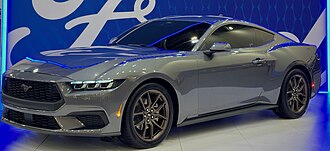
1. Symptoms of P0087 on Ford Mustang
When the Engine Control Module (ECM/PCM) on your Ford Mustang (5.0L Gen 4 Coyote V8 (480HP–500HP Dark Horse) / 2.3L High Output EcoBoost) logs fault code P0087, drivers commonly observe:
2. Most Likely Causes on Ford Mustang
Historical warranty claims and technical repair bulletins for Ford Mustang point to the following failure distribution:
3. Step-by-Step DIY Repair Guide for Ford Mustang
Connect an OBD-II scan tool and inspect live Mode $01 telemetry for Fuel Rail Pressure (FRP). Compare actual pressure against the ECU's desired setpoint during idle and 2,500 RPM revs. on the Ford Mustang equipped with 5.0L Gen 4 Coyote V8 (480HP–500HP Dark Horse) / 2.3L High Output EcoBoost.
Verify the low-pressure lift pump is delivering 55–75 PSI to the HPFP using a mechanical fuel pressure gauge on the Schrader valve. on the Ford Mustang equipped with 5.0L Gen 4 Coyote V8 (480HP–500HP Dark Horse) / 2.3L High Output EcoBoost.
Check the 3-wire FRP sensor harness for 5V reference, ground, and signal voltage (typically 0.5V at key-on to 4.5V at peak pressure). on the Ford Mustang equipped with 5.0L Gen 4 Coyote V8 (480HP–500HP Dark Horse) / 2.3L High Output EcoBoost.
If low-pressure feed is verified but rail pressure remains under threshold, replace the camshaft-driven HPFP and follower. on the Ford Mustang equipped with 5.0L Gen 4 Coyote V8 (480HP–500HP Dark Horse) / 2.3L High Output EcoBoost.
Clear DTC memory with scanner, start engine, check for fuel leaks, and drive for 15 minutes to verify fuel pressure monitors pass. on the Ford Mustang equipped with 5.0L Gen 4 Coyote V8 (480HP–500HP Dark Horse) / 2.3L High Output EcoBoost.
Equipment for Diagnosing Ford Mustang (P0087)
Ford Mustang OEM Replacement Sensor
Direct-fit replacement assembly engineered to OEM tolerances for Ford Mustang.
AstroAI Auto-Ranging Digital Multimeter
Essential for testing 0.1V–5.0V sensor reference signals, ground continuity (<0.20Ω), and harness resistance.
BlueDriver Bluetooth Pro OBDII Scan Tool
Reads and clears enhanced codes (ABS, Airbag, Transmission, Engine) & live freeze-frame telemetry on phone.
Other Common Fault Codes on Ford Mustang
Frequently diagnosed powertrain, emissions, and sensor trouble codes logged on the Ford Mustang:
4. Ford Mustang P0087 FAQs
What causes code P0087 to trigger on a Ford Mustang?
On the Ford Mustang (5.0L Gen 4 Coyote V8 (480HP–500HP Dark Horse) / 2.3L High Output EcoBoost), P0087 is most frequently caused by Failing High-Pressure Fuel Pump (HPFP) or Clogged fuel filter or restricted in-tank low-pressure fuel pump (LPFP).
Where is the OBD-II port located on my Ford Mustang?
On the Ford Mustang, the 16-pin DLC diagnostic connector is located Driver lower dash near OBD trim slot. Plug in any standard OBD-II scanner with the ignition in the ON position to read freeze-frame parameters.
Can I safely drive my Ford Mustang with code P0087?
No. Low fuel pressure causes severe engine hesitation, misfires, stalling at speed, and lean detonation. Given that P0087 carries a Critical severity rating, we advise avoiding heavy towing or aggressive throttle inputs until sensor readings are verified.