
P2187 on Subaru Outback
Factory diagnostic protocol and troubleshooting wire for fault code P2187 specifically for the Subaru Outback (2020–2026, 2.5L Boxer-4 (FB25D 182HP) / 2.4L Turbocharged Boxer-4 (FA24F 260HP XT)).
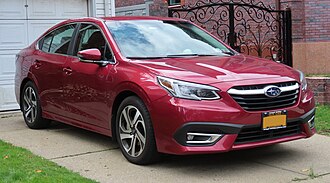
1. Symptoms of P2187 on Subaru Outback
When the Engine Control Module (ECM/PCM) on your Subaru Outback (2.5L Boxer-4 (FB25D 182HP) / 2.4L Turbocharged Boxer-4 (FA24F 260HP XT)) logs fault code P2187, drivers commonly observe:
2. Most Likely Causes on Subaru Outback
Historical warranty claims and technical repair bulletins for Subaru Outback point to the following failure distribution:
3. Step-by-Step DIY Repair Guide for Subaru Outback
Check STFT and LTFT. If trims are +20% at idle and drop to +3% at 2,500 RPM, a vacuum leak is 100% confirmed. on the Subaru Outback equipped with 2.5L Boxer-4 (FB25D 182HP) / 2.4L Turbocharged Boxer-4 (FA24F 260HP XT).
Try to remove oil filler cap while engine idles. If cap is held down with strong vacuum suction and engine whines, the PCV diaphragm is ruptured. on the Subaru Outback equipped with 2.5L Boxer-4 (FB25D 182HP) / 2.4L Turbocharged Boxer-4 (FA24F 260HP XT).
Connect smoke machine to intake to identify leaking PCV hoses, manifold gaskets, or brake booster lines. on the Subaru Outback equipped with 2.5L Boxer-4 (FB25D 182HP) / 2.4L Turbocharged Boxer-4 (FA24F 260HP XT).
Install a new OEM PCV oil separator assembly or replace cracked vacuum hoses. on the Subaru Outback equipped with 2.5L Boxer-4 (FB25D 182HP) / 2.4L Turbocharged Boxer-4 (FA24F 260HP XT).
Clear DTCs and verify fuel trims return to ±5% at idle. on the Subaru Outback equipped with 2.5L Boxer-4 (FB25D 182HP) / 2.4L Turbocharged Boxer-4 (FA24F 260HP XT).
Equipment for Diagnosing Subaru Outback (P2187)
Subaru Outback OEM Replacement Sensor
Direct-fit replacement assembly engineered to OEM tolerances for Subaru Outback.
AstroAI Auto-Ranging Digital Multimeter
Essential for testing 0.1V–5.0V sensor reference signals, ground continuity (<0.20Ω), and harness resistance.
BlueDriver Bluetooth Pro OBDII Scan Tool
Reads and clears enhanced codes (ABS, Airbag, Transmission, Engine) & live freeze-frame telemetry on phone.
Other Common Fault Codes on Subaru Outback
Frequently diagnosed powertrain, emissions, and sensor trouble codes logged on the Subaru Outback:
4. Subaru Outback P2187 FAQs
What causes code P2187 to trigger on a Subaru Outback?
On the Subaru Outback (2.5L Boxer-4 (FB25D 182HP) / 2.4L Turbocharged Boxer-4 (FA24F 260HP XT)), P2187 is most frequently caused by Torn diaphragm in PCV valve / oil separator (common on VW/Audi 2.0T) or Intake manifold gasket or vacuum hose leak.
Where is the OBD-II port located on my Subaru Outback?
On the Subaru Outback, the 16-pin DLC diagnostic connector is located Under driver dash, left of steering column above pedals. Plug in any standard OBD-II scanner with the ignition in the ON position to read freeze-frame parameters.
Can I safely drive my Subaru Outback with code P2187?
Yes, for moderate driving. Fix promptly to prevent unmetered air from causing lean idle misfires. Given that P2187 carries a Medium severity rating, we advise avoiding heavy towing or aggressive throttle inputs until sensor readings are verified.