
B1000 on Toyota Tundra
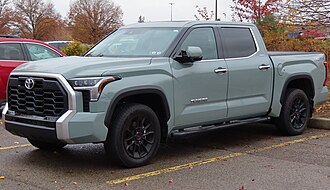
Factory diagnostic protocol and troubleshooting wire for fault code B1000 specifically for the Toyota Tundra (2022–2026, 3.4L Twin-Turbo V6 (V35A-FTS 389HP) / i-FORCE MAX Hybrid (437HP)).
1. Symptoms of B1000 on Toyota Tundra
When the Engine Control Module (ECM/PCM) on your Toyota Tundra (3.4L Twin-Turbo V6 (V35A-FTS 389HP) / i-FORCE MAX Hybrid (437HP)) logs fault code B1000, drivers commonly observe:
2. Most Likely Causes on Toyota Tundra
Historical warranty claims and technical repair bulletins for Toyota Tundra point to the following failure distribution:
3. Step-by-Step DIY Repair Guide for Toyota Tundra
Interface with the diagnostic port or system console using verified scanning hardware. Record freeze-frame data, active sub-codes, and timestamps to isolate whether B1000 is static or intermittent. on the Toyota Tundra equipped with 3.4L Twin-Turbo V6 (V35A-FTS 389HP) / i-FORCE MAX Hybrid (437HP).
Visually inspect the physical component (Supplemental Restraint System (SRS) Module), connector pins, and associated wiring harnesses for signs of corrosion, thermal melting, or loose grounding clips. on the Toyota Tundra equipped with 3.4L Twin-Turbo V6 (V35A-FTS 389HP) / i-FORCE MAX Hybrid (437HP).
Measure reference voltages and resistance thresholds against manufacturer factory specifications. Replace any component failing nominal impedance tolerances. on the Toyota Tundra equipped with 3.4L Twin-Turbo V6 (V35A-FTS 389HP) / i-FORCE MAX Hybrid (437HP).
Install genuine OEM replacement hardware or execute registry / service commands. Ensure all mounting bolts are torqued to factory specifications. on the Toyota Tundra equipped with 3.4L Twin-Turbo V6 (V35A-FTS 389HP) / i-FORCE MAX Hybrid (437HP).
Erase the fault code from non-volatile memory. Perform a standard verification cycle (e.g. 15-minute mixed drive or system stress benchmark) to ensure monitors reset to 'Ready' state without recurrent fault flags. on the Toyota Tundra equipped with 3.4L Twin-Turbo V6 (V35A-FTS 389HP) / i-FORCE MAX Hybrid (437HP).
Equipment for Diagnosing Toyota Tundra (B1000)
Toyota Tundra OEM Replacement Sensor
Direct-fit replacement assembly engineered to OEM tolerances for Toyota Tundra.
AstroAI Auto-Ranging Digital Multimeter
Essential for testing 0.1V–5.0V sensor reference signals, ground continuity (<0.20Ω), and harness resistance.
BlueDriver Bluetooth Pro OBDII Scan Tool
Reads and clears enhanced codes (ABS, Airbag, Transmission, Engine) & live freeze-frame telemetry on phone.
Other Common Fault Codes on Toyota Tundra
Frequently diagnosed powertrain, emissions, and sensor trouble codes logged on the Toyota Tundra:
4. Toyota Tundra B1000 FAQs
What causes code B1000 to trigger on a Toyota Tundra?
On the Toyota Tundra (3.4L Twin-Turbo V6 (V35A-FTS 389HP) / i-FORCE MAX Hybrid (437HP)), B1000 is most frequently caused by Component aging, oxidation, or degraded internal circuit element (Supplemental Restraint System (SRS) Module) or Wiring harness abrasion, loose terminal pin, or ground voltage float.
Where is the OBD-II port located on my Toyota Tundra?
On the Toyota Tundra, the 16-pin DLC diagnostic connector is located Driver side lower dash assembly near parking brake. Plug in any standard OBD-II scanner with the ignition in the ON position to read freeze-frame parameters.
Can I safely drive my Toyota Tundra with code B1000?
No. Immediate shutdown / repair required to prevent permanent hardware destruction or total system lockup. Given that B1000 carries a Critical severity rating, we advise avoiding heavy towing or aggressive throttle inputs until sensor readings are verified.