
U0073 on Toyota Tundra
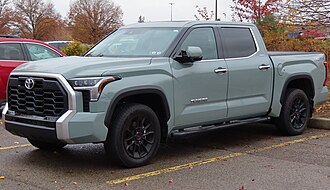
Factory diagnostic protocol and troubleshooting wire for fault code U0073 specifically for the Toyota Tundra (2022–2026, 3.4L Twin-Turbo V6 (V35A-FTS 389HP) / i-FORCE MAX Hybrid (437HP)).
1. Symptoms of U0073 on Toyota Tundra
When the Engine Control Module (ECM/PCM) on your Toyota Tundra (3.4L Twin-Turbo V6 (V35A-FTS 389HP) / i-FORCE MAX Hybrid (437HP)) logs fault code U0073, drivers commonly observe:
2. Most Likely Causes on Toyota Tundra
Historical warranty claims and technical repair bulletins for Toyota Tundra point to the following failure distribution:
3. Step-by-Step DIY Repair Guide for Toyota Tundra
Remove any aftermarket insurance dongles, GPS trackers, or scan tools plugged into the DLC port. on the Toyota Tundra equipped with 3.4L Twin-Turbo V6 (V35A-FTS 389HP) / i-FORCE MAX Hybrid (437HP).
Inspect braided ground straps on engine and transmission. Clean all contact surfaces to bare metal. on the Toyota Tundra equipped with 3.4L Twin-Turbo V6 (V35A-FTS 389HP) / i-FORCE MAX Hybrid (437HP).
Scan all modules on vehicle. Note which modules are online and which are offline to pinpoint the break in the network daisy-chain. on the Toyota Tundra equipped with 3.4L Twin-Turbo V6 (V35A-FTS 389HP) / i-FORCE MAX Hybrid (437HP).
Verify 60 ohms across Pins 6 and 14 with battery disconnected. on the Toyota Tundra equipped with 3.4L Twin-Turbo V6 (V35A-FTS 389HP) / i-FORCE MAX Hybrid (437HP).
Clear DTCs from all modules and road test to verify error-free network transmission. on the Toyota Tundra equipped with 3.4L Twin-Turbo V6 (V35A-FTS 389HP) / i-FORCE MAX Hybrid (437HP).
Equipment for Diagnosing Toyota Tundra (U0073)
Toyota Tundra OEM Replacement Sensor
Direct-fit replacement assembly engineered to OEM tolerances for Toyota Tundra.
AstroAI Auto-Ranging Digital Multimeter
Essential for testing 0.1V–5.0V sensor reference signals, ground continuity (<0.20Ω), and harness resistance.
BlueDriver Bluetooth Pro OBDII Scan Tool
Reads and clears enhanced codes (ABS, Airbag, Transmission, Engine) & live freeze-frame telemetry on phone.
Other Common Fault Codes on Toyota Tundra
Frequently diagnosed powertrain, emissions, and sensor trouble codes logged on the Toyota Tundra:
4. Toyota Tundra U0073 FAQs
What causes code U0073 to trigger on a Toyota Tundra?
On the Toyota Tundra (3.4L Twin-Turbo V6 (V35A-FTS 389HP) / i-FORCE MAX Hybrid (437HP)), U0073 is most frequently caused by Loose or corroded ground connection on transmission or frame or Faulty Transmission Control Module (TCM) or ABS module pulling bus down.
Where is the OBD-II port located on my Toyota Tundra?
On the Toyota Tundra, the 16-pin DLC diagnostic connector is located Driver side lower dash assembly near parking brake. Plug in any standard OBD-II scanner with the ignition in the ON position to read freeze-frame parameters.
Can I safely drive my Toyota Tundra with code U0073?
No. Bus is shut down due to excessive transmission errors, leaving vehicle in unpredictable limp mode. Given that U0073 carries a Critical severity rating, we advise avoiding heavy towing or aggressive throttle inputs until sensor readings are verified.